
Blogs
What Is A Grid Simulator And How Does It Work?

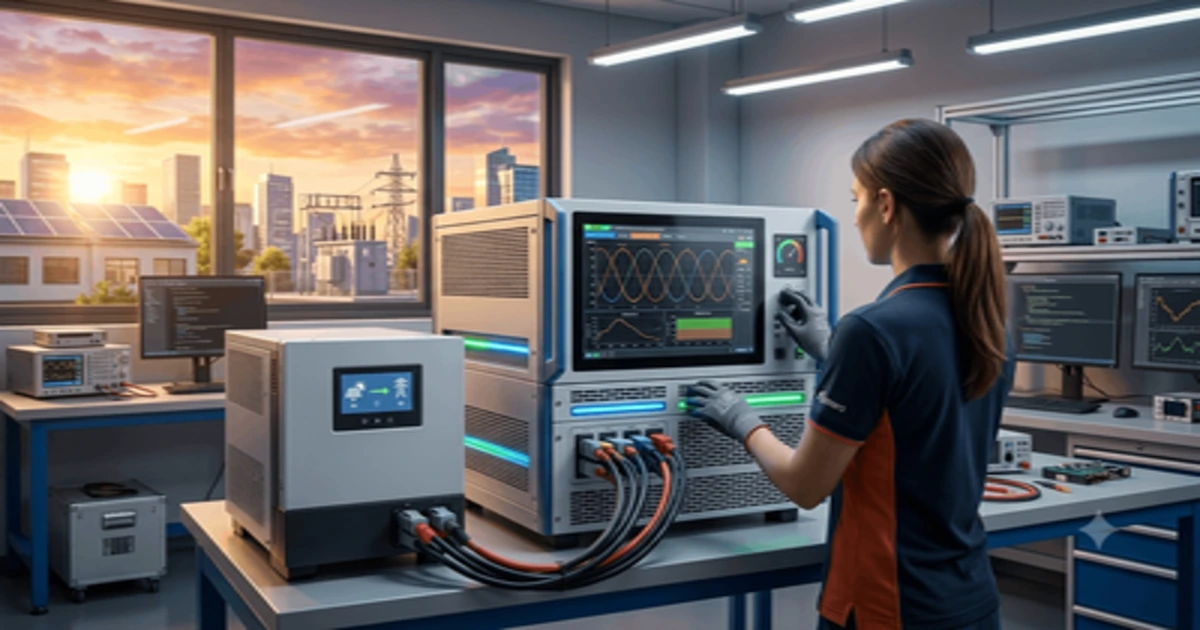
Before a solar inverter, an EV charger, or a battery storage system ever connects to a real power grid, it goes through a gauntlet. Engineers push it through voltage swings, frequency shifts, fault conditions, and all the messy, unpredictable behavior the real world throws at power electronics. And they do all of this without touching an actual grid.
How? With a piece of equipment you have probably never heard of, but that is absolutely essential to modern energy development. That equipment is a grid simulator, and once you understand what it does and how it works, you will start seeing why it shows up in laboratories developing everything from photovoltaic systems to electric vehicles. Let’s walk through exactly what a grid simulator means in practice, how these machines operate, and what they are used for.
The Core Answer: What Is A Grid Simulator?
A grid simulator is a piece of programmable test equipment that replicates the electrical behavior of a real power grid in a controlled laboratory setting. Instead of connecting a device under test directly to the utility grid, which gives you no control over what conditions you are testing under, a grid simulator lets engineers generate precisely programmed AC output that mimics whatever grid conditions they want to test against.
Stable and clean. Voltage sag. Frequency drift. Phase imbalance. Fault conditions. All of it, on demand, without touching a live grid.
BOS Power designs programmable power systems, including grid simulation solutions for exactly these kinds of demanding validation environments.
How A Grid Simulator Works
Understanding what a grid simulator is at a functional level starts with its bidirectional power capability. A standard programmable AC power supply can generate a controlled AC output, but a grid simulator goes further. It can both source power to the device under test and sink power coming back from it, just the way a real grid does. This bidirectional flow is critical for testing grid-tied devices like inverters that actively push power onto the grid.
The simulator takes real utility power in, conditions, and converts it through its internal power electronics, and outputs a precisely controlled AC waveform that it can vary in real time based on whatever test scenario is programmed.
Key Features That Separate A Grid Simulator From A Standard AC Supply
A basic programmable AC power supply can adjust voltage, current, and frequency, but a grid simulator offers capabilities that go well beyond that. It can independently control each of the three phases in a three-phase system, allowing engineers to test conditions like phase imbalance that a standard supply cannot replicate. It can inject harmonic and inter-harmonic distortion into the output waveform to simulate real-world power quality issues. It can reproduce complex events like low-voltage ride-through and high-voltage ride-through, which are conditions where grid voltage drops or spikes suddenly, and grid-tied devices are required by regulation to stay connected and operate stably through them.
Regenerative Grid Simulators And Energy Efficiency
Modern grid simulators are often regenerative, which means that power absorbed from the device under test does not just get wasted as heat. Instead, it gets fed back to the utility supply in a clean, low-distortion form. For high-power testing scenarios involving hundreds of kilowatts or even megawatts, this regenerative capability makes a significant difference in the energy cost and heat management of a test facility.
What Is A Grid Simulator Used To Test?
The applications for a grid simulator are broad and growing as renewable energy and electrification expand. Inverter testing is one of the most common uses, making sure that solar inverters and battery inverters perform correctly and stay compliant under a full range of grid conditions. Energy storage system integration is another major application, validating how battery systems interact with the grid during charging, discharging, and fault events. EV charger testing, on-board charger validation, and compliance testing for standards like IEEE 1547, UL 1741, and IEC 61000 all regularly involve grid simulators as the central piece of test equipment.
Why Grid Simulation Matters More Than Ever
As more solar, wind, and battery storage systems connect to the grid, the need to validate that those devices behave correctly under a full range of conditions becomes more critical. A grid simulator makes it possible to test those behaviors systematically and repeatedly in a controlled environment, catching problems before deployment rather than after.
Explore Grid Simulation Solutions With BOS Power
Whether you are developing solar inverters, battery storage systems, or EV charging infrastructure, having the right test equipment is as important as having the right product design. BOS Power brings over two decades of expertise in programmable power electronics, including solutions relevant to grid simulation and inverter testing applications. If you are working through the challenges of what a grid simulator is and which setup fits your test requirements, connect with BOS Power and get guidance from engineers who understand the demands of modern grid-tied device validation.
