
Blogs
AC Coupled vs DC Coupled Battery Energy Storage Systems

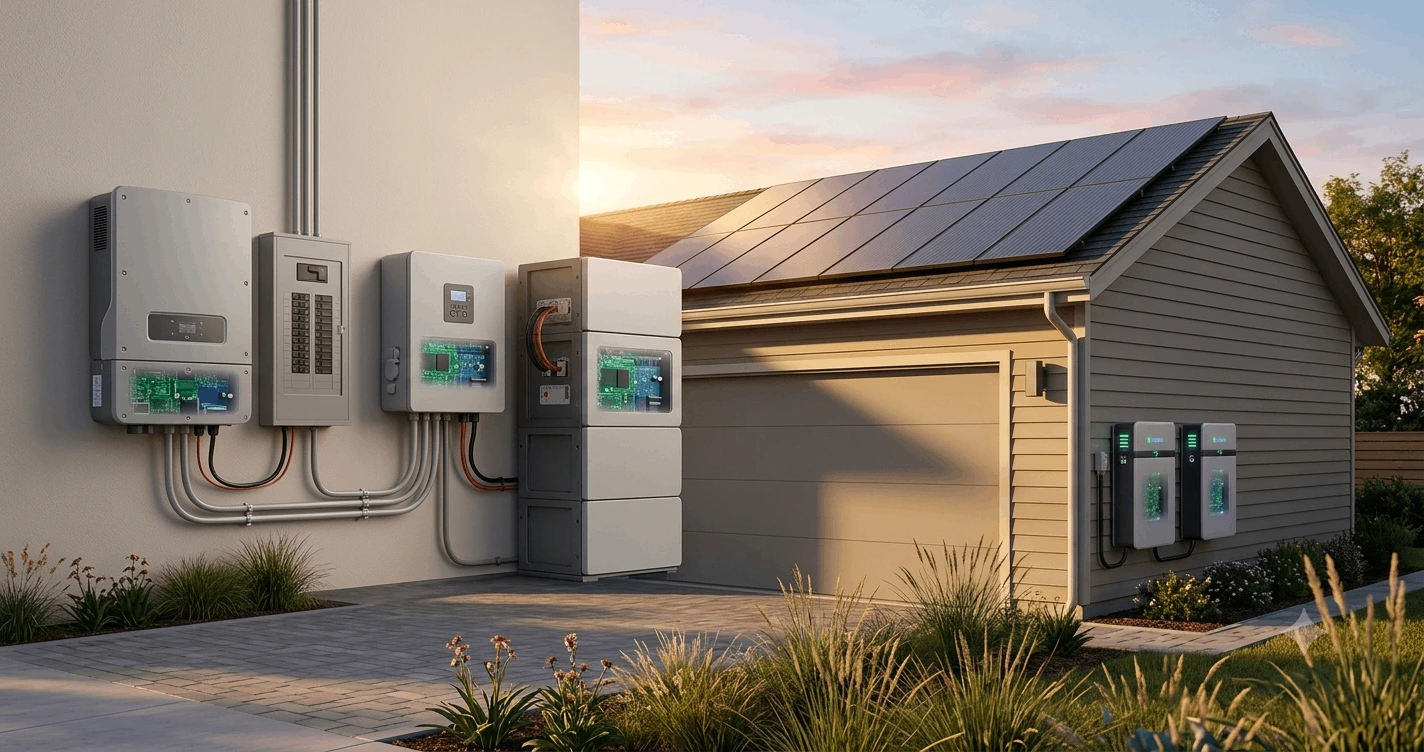
Picture this. You have just installed solar panels on your roof or across your facility, and now you are staring at a big decision: how do you actually store all that extra energy? The moment you start researching battery storage, you will run into two terms that seem to pop up everywhere: AC-coupled and DC-coupled. And honestly, the jargon can feel overwhelming at first.
Here is the good news. Once you understand what is actually happening behind these terms, the choice becomes a lot less intimidating. By the end of this guide, you will know exactly how AC-coupled vs. DC-coupled systems work, where each one shines, and which setup makes the most sense for your project. Let’s break it down together.
What Does AC Coupled vs DC Coupled Really Mean?
At its core, the AC-coupled vs. DC-coupled debate comes down to one simple question. Where does the conversion between alternating current and direct current happen in your system?
Solar panels generate direct current (DC) electricity, while your home or business runs on alternating current (AC). Somewhere along the way, that DC power has to become AC power, and your battery has to fit into that journey too. How many times that conversion happens, and where it happens, is what separates these two setups.
How an AC Coupled System Works
In an AC-coupled system, your solar panels connect to their own solar inverter, which converts DC power into AC power for your home. Your battery has a separate battery inverter that converts DC back into AC for storage, then back to DC again when you need to use it.
That is three conversions in total. Sounds like a lot, right? The upside is flexibility. AC-coupled setups are popular for retrofits, since you can add a battery to an existing solar system without touching your original inverter. Understanding this trade-off is the first step in any AC-coupled vs. DC-coupled decision.
How a DC Coupled System Works
A DC-coupled system takes a more streamlined approach. Your solar panels and battery both connect to a single hybrid inverter on the DC side. Energy flows from the panels straight into the battery as DC power, with no detour through AC first. Only when that stored energy needs to power your appliances does it get converted to AC, just once.
Fewer conversions mean less energy lost along the way, which is why DC-coupled systems are often the go-to choice for new installations designed from scratch.
Efficiency, Cost, and Which One Wins
When you compare AC-coupled vs. DC-coupled systems side by side, efficiency is usually where DC-coupled pulls ahead. AC-coupled setups typically run at around 90 to 94 percent round-trip efficiency because of those extra conversions, while DC-coupled systems can reach up to 98 percent. Over the lifetime of your system, that difference adds up to real savings.
On the cost side, DC-coupled systems often need fewer components since they share one inverter, which can mean lower upfront equipment costs for new builds. AC-coupled systems, on the other hand, tend to be easier and faster to retrofit onto an existing setup.
So, Which Setup Is Right for You?
If you are adding storage to a solar system you already have, AC-coupled is usually the easier and faster path, since your existing solar inverter stays untouched. If you are designing a system from the ground up and efficiency is your priority, DC-coupled is often the smarter long-term investment.
The honest answer when comparing AC-coupled vs. DC-coupled setups is that there is no universal winner. It depends on your existing equipment, your budget, and your energy goals.
Get Expert Guidance From BOS Power
Choosing between AC-coupled and DC-coupled battery storage does not have to be a guessing game. The team at BOS Power has spent over two decades engineering inverter and energy storage solutions, and they can help you map out the setup that fits your site, your equipment, and your goals. Whether you are retrofitting an existing solar array or designing a new energy storage project from scratch, reach out to BOS Power and get the AC-coupled vs. DC-coupled clarity you need before you invest.
