
Blogs
Single Phase vs Three Phase Power : What’s the Difference

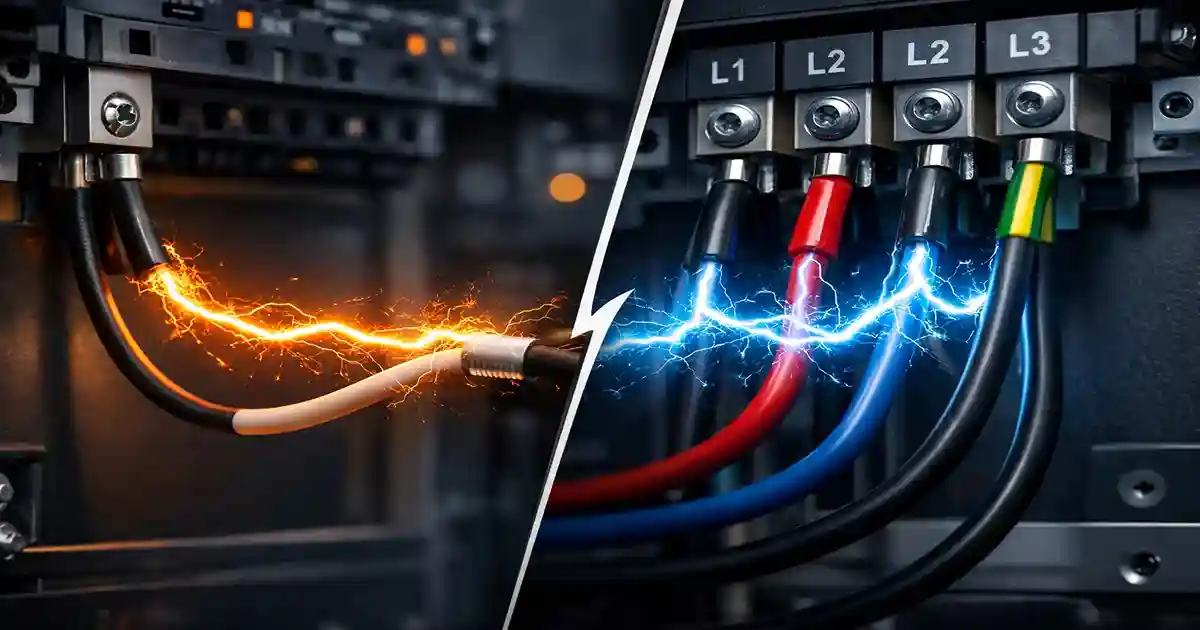
Electricity powers almost everything around you. From small household appliances to large industrial machines, every system depends on a stable electrical supply. But not all power systems work the same way. One of the most common questions engineers, technicians, and even facility managers ask is about single phase vs three phase power.
Understanding this difference helps you choose the right system for efficiency, stability, and performance. Whether you are designing electrical infrastructure, installing equipment, or working with industrial power systems, knowing how these two systems operate makes a big difference.
Let’s walk through how both power types work and where each one is used.
Understanding Single-Phase Power
Single-phase power is the most common electrical system used in homes and small commercial buildings. It delivers electricity through one alternating current waveform. This means the voltage rises and falls in a single cycle.
In simple terms, single-phase systems use one live wire and one neutral wire to deliver power. Because of its straightforward design, it works well for low-power applications like lighting, televisions, refrigerators, and small electronics.
When comparing single-phase versus three-phase systems, single-phase setups are easier to install and maintain. However, they have limitations. Power delivery is not constant throughout the cycle. The voltage reaches peaks and drops repeatedly, which can make it less suitable for heavy loads or large motors.
That is why single-phase power is rarely used for large industrial machinery.
What Makes Three-Phase Power Different
Three-phase power is designed to deliver electricity more efficiently for larger systems. Instead of a single waveform, three-phase systems use three alternating currents that operate 120 degrees apart.
This configuration provides a continuous flow of power. The voltage never drops to zero because when one phase reaches its minimum point, another phase is already rising.
When you analyze single phase vs three phase systems, this steady power delivery becomes the biggest advantage of three-phase electricity. It allows equipment to run more smoothly and efficiently.
Three-phase systems are commonly used in manufacturing facilities, data centers, marine infrastructure, and large commercial buildings. Equipment such as motors, compressors, and industrial converters depends on three-phase power to operate reliably.
Many advanced power solutions developed by companies like BOS Power support these industrial environments by managing voltage, frequency, and power conversion for complex electrical systems. Also read about What Is Harmonics in Electrical Systems.
Why Industries Prefer Three-Phase Systems
Large equipment needs reliable and continuous power. Three-phase systems distribute electrical load more evenly across conductors, which improves efficiency and reduces energy losses.
When comparing single phase vs three phase, the three-phase system also supports higher power loads without requiring larger conductors. This makes it more practical for industrial infrastructure where reliability and scalability are critical.
Three-phase motors also start more smoothly and operate with less vibration compared to single-phase motors. This improves equipment lifespan and reduces maintenance costs.
For industrial facilities, the result is improved performance and better energy efficiency.
Choosing the Right Power System
Both systems have their place. Single-phase power works well for homes, offices, and smaller equipment. Three-phase systems are better suited for manufacturing plants, testing facilities, and high-power operations.
The key to choosing the right system is understanding your load requirements, equipment type, and long-term energy needs.
Once you understand single-phase vs. three-phase power, it becomes easier to design electrical systems that operate efficiently and safely.
Conclusion
The difference between single phase vs three phase power comes down to efficiency, stability, and application. Single-phase systems support everyday electrical needs, while three-phase systems power industries and large-scale operations.
If you are planning an industrial power system or evaluating electrical infrastructure, understanding this distinction helps you make better engineering decisions.
To learn more about advanced power conversion systems and industrial energy solutions, visit BOS Power and explore technologies built for modern electrical environments.
