
Blogs
What Is an Onshore Power Supply and How Does It Work?

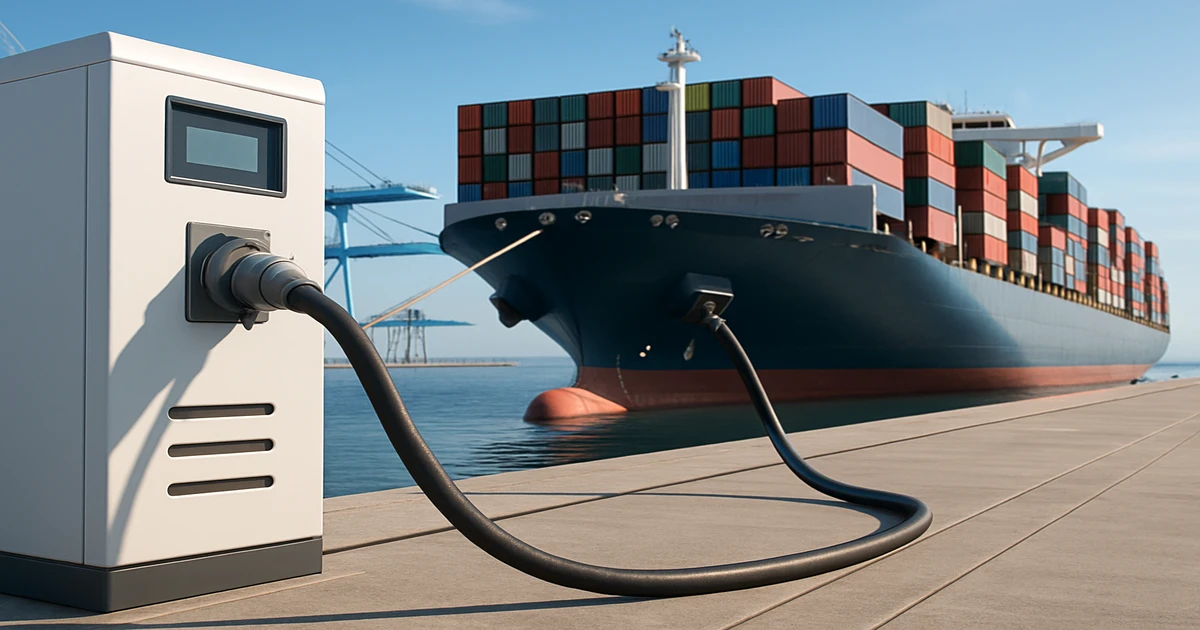
When a ship docks at port, its engines don’t stop working. Traditionally, vessels kept auxiliary engines running to power onboard systems, burning fuel and releasing emissions even while idle. That’s where onshore power supply (OPS) comes in. It’s a cleaner, quieter, and more efficient solution that lets ships “plug in” to local electricity instead of running their generators. At BOS Power, we design advanced onshore and marine shore power systems that help ports and vessels transition toward a sustainable energy future.
What Is an Onshore Power Supply?
It is (often called “shore power”), enabling ships at berth to connect directly to the port’s electrical grid. By drawing power from land-based sources, vessels can switch off their diesel engines, significantly reducing emissions, noise, and operating costs.
This system isn’t limited to large commercial ports; it’s increasingly being adopted for ferries, cruise terminals, and cargo hubs around the world.
Key Components Include:
- Shore Connection Units: Provide the interface between the ship and the port power.
- Frequency Converters: Match shore voltage and frequency to ship requirements.
- Cable Management Systems: Safely handle and store heavy power cables.
- Control & Protection Systems: Ensure stable, safe, and reliable power flow.
How Does Onshore Power Supply Work?
The concept behind this power supply system is simple but technologically precise. When a vessel arrives at port:
- It connects to a shore power supply via specialized high-voltage cables.
- Frequency converters synchronize the shore grid with the vessel’s internal power system.
- Once stable, onboard generators shut down, shifting all electrical loads to shore power.
- The BOS Power system continuously monitors and adjusts voltage and frequency for consistent performance.
By replacing onboard generation with grid-supplied electricity, ships reduce emissions at the port, contributing to cleaner air and quieter operations for nearby communities.
The Benefits of Onshore Power Supply Systems
Switching to onshore power isn’t just an environmental choice. It’s a strategic investment in efficiency and compliance.
Key Advantages:
- Emission Reduction: Cuts CO₂, NOx, and particulate emissions by up to 98%.
- Fuel Savings: Eliminates the need for diesel use while docked.
- Noise Reduction: Creates a quieter environment for port workers and residents.
- Operational Safety: Stable, grid-based electricity improves system reliability.
- Regulatory Compliance: Meets growing international maritime sustainability standards.
- Future-Ready Infrastructure: Scalable for hybrid and fully electric ships.
BOS Power’s Role in Marine Energy Transition
We have decades of experience delivering shore power supply and marine energy systems to major industrial ports and shipyards. Our solutions are designed for durability, safety, and precision, supporting vessels of varying capacities and electrical standards.
Our systems feature:
- High-Efficiency Converters for seamless frequency and voltage adaptation.
- Smart Control Systems for real-time performance monitoring.
- Modular Designs are adaptable to different vessel classes and port layouts.
- Proven Reliability through rigorous in-house testing and compliance certifications.
BOS Power’s goal is simple: to make energy cleaner, safer, and more efficient across the marine landscape.
Conclusion
The future of maritime power lies onshore. By embracing onshore power supply systems, ports and shipping operators can cut emissions, save fuel, and future-proof their operations against tightening environmental standards. At BOS Power, we’re proud to be part of that transformation, delivering innovative shore power systems that keep vessels running efficiently, quietly, and sustainably.
Also explore Regulated Power Supply to learn how our technology applications.
