
Blogs
AC Power Supply vs DC Power Supply: What is the Difference?

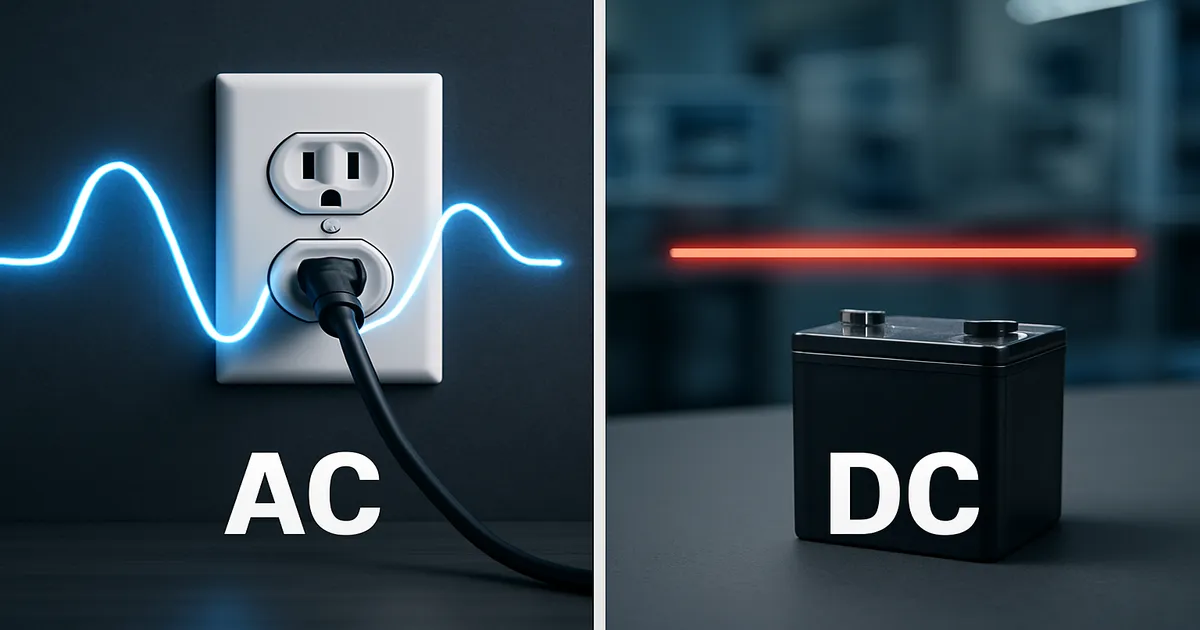
Electricity powers nearly everything around us, but not all electricity is the same. When you hear about AC vs DC power supply, it may sound like a technical debate, yet the difference between the two is at the core of modern power systems. From industrial testing to renewable energy, knowing whether you need alternating current (AC) or direct current (DC) can determine the success and efficiency of your project. At BOS POWER LLC, we’ve spent decades designing reliable test power supplies and new energy systems, so let’s break down the essentials of AC and DC power supplies, how they differ, and where each is used.
What is an AC Power Supply?
An AC power supply delivers electricity in the form of alternating current, meaning the flow of electric charge reverses direction at regular intervals. This makes it highly compatible with power grids worldwide, as household and industrial power distribution is based on AC.
AC supplies are known for:
- Flexibility in voltage and frequency control – essential for testing electrical equipment.
- High efficiency in long-distance transmission – why power utilities favor AC for distribution.
- Grid simulation capabilities – AC programmable sources can replicate various grid conditions for testing renewable systems.
At BOS POWER LLC, our Programmable AC Power Supplies (AC80 series) and AC Grid Simulators (AC2000) are engineered for industries that need precision, reliability, and scalable solutions for real-world testing scenarios.
What is a DC Power Supply?
A DC power supply provides direct current, where electricity flows in one steady direction. This type of power is essential for electronics, batteries, and renewable energy systems like solar panels.
DC supplies are especially valued for:
- Stable and predictable output – perfect for sensitive electronics.
- Energy feedback features – bidirectional DC supplies can return power to the grid.
- Battery simulation and EV testing – critical in modern automotive and energy storage applications.
We have developed advanced Bidirectional DC Power Supplies (BD series) and Battery Simulators (BD-S) that deliver fast dynamic response, wide voltage ranges, and efficient energy recovery.
Key Differences Between AC and DC Power Supplies
Understanding the AC vs DC power supply distinction comes down to their core behavior:
- Nature of Current: AC alternates; DC flows in one direction.
- Application Areas: AC powers grids, appliances, and heavy machinery; DC powers electronics, batteries, and renewable storage.
- Testing Capabilities: AC supplies replicate grid scenarios; DC supplies simulate batteries and power conversion systems.
- Scalability: Both can be engineered to megawatt levels, something BOS has already delivered in large-scale projects.
Choosing the Right Power Supply for Your Needs
The choice isn’t about which is “better” but which is right for your application. If your project involves simulating grid conditions, appliance testing, or marine shore power, an AC supply is the right fit. If you’re working with electric vehicles, battery systems, or renewable energy, a DC supply becomes essential.
At BOS POWER LLC, we specialize in both AC and DC test power solutions, helping industries move forward with confidence. Whether you need programmable AC sources, bidirectional DC power, or integrated energy-storage systems, we engineer solutions that guarantee performance, safety, and innovation. Also Read Introduction to Microgrid Power Systems.
Conclusion
The difference between AC and DC power supplies may seem simple at first, but the choice carries significant weight in modern applications. From renewable integration to EV development, each has its role to play. At BOS POWER LLC, we not only understand this difference, but we also design products that maximize it. Explore our AC Power Supply Series and DC Power Supply Series to see how our technology can empower your projects today.
