
Blogs
What Is Cold Ironing in Shore Power Systems?

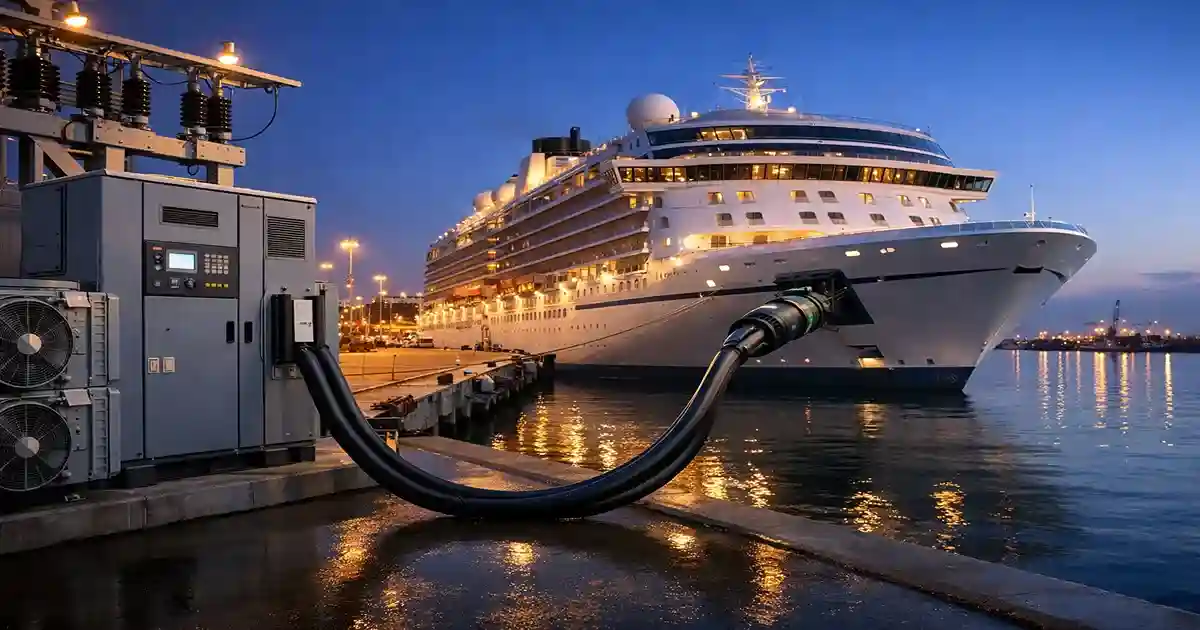
When ships arrive at port, their engines do not simply stop running. Even while docked, vessels need electricity to power lighting, navigation systems, refrigeration, and onboard operations. Traditionally, ships generate this electricity using onboard diesel generators. This method works, but it also produces noise, fuel consumption, and air pollution near busy ports.
This is where cold ironing becomes important.
Cold ironing is a shore-to-ship power solution that allows vessels to shut down their onboard engines and connect directly to land-based electricity while docked. Instead of burning fuel, the ship receives power from the port’s electrical grid.
Understanding cold ironing helps explain how modern ports reduce emissions and improve energy efficiency while maintaining reliable operations.
Understanding How Cold Ironing Works
At its core, cold ironing connects a vessel to a shore-based electrical system that supplies the power normally generated by the ship’s engines. Once the connection is established, the ship’s generators are turned off and the vessel operates using electricity supplied from the port.
The process involves several key components. A shore power station provides electricity from the local grid. Power conversion equipment ensures the voltage and frequency match the vessel’s onboard systems. Specialized cables connect the ship to the shore power infrastructure.
This shore-to-ship power process requires careful engineering because ships operate under different electrical standards depending on their country of origin.
Power conversion technologies developed by companies such as BOS Power help ports manage voltage and frequency differences between local grids and vessel power systems.
Why Ports Use Cold Ironing
Ports around the world are adopting cold ironing to address environmental and operational challenges. When ships rely on diesel generators while docked, emissions such as nitrogen oxides, sulfur oxides, and particulate matter are released into nearby communities.
Cold ironing reduces these emissions by allowing ships to use grid electricity instead of fuel-powered generators. In many regions, this electricity can also come from renewable energy sources, which further lowers environmental impact.
Beyond environmental benefits, it also reduces noise levels in port areas. Ships operating on shore power run more quietly, which improves working conditions for port staff and nearby residents.
Another advantage is improved equipment efficiency. Electrical power from the grid can often provide more stable energy compared to onboard generators.
Challenges in Implementing Cold Ironing
Although cold ironing offers clear benefits, implementing it requires significant infrastructure. Ports must install shore power stations, cable management systems, and frequency conversion equipment.
One of the biggest challenges is matching the ship’s electrical requirements with the local grid. Ships may operate on 60 Hz power while the port grid supplies 50 Hz electricity, or vice versa.
To solve this issue, ports often use frequency converters and industrial power systems to ensure compatibility. Power engineering solutions developed by BOS Power support these conversions and help maintain stable electrical output during shore-to-ship connections.
The Future of Shore Power Systems
As environmental regulations become stricter, it is expected to play an increasingly important role in global maritime operations. Many international ports are already investing in shore power infrastructure to support cleaner shipping practices.
With advances in power electronics, frequency conversion, and renewable energy integration, cold ironing systems are becoming more efficient and easier to deploy.
For ports, shipping companies, and energy providers, the transition toward shore-to-ship power represents a practical step toward reducing emissions without interrupting maritime operations.
Conclusion
Cold ironing is a powerful solution for reducing pollution and improving energy efficiency in modern ports. By allowing ships to shut down their generators and connect to shore power, cold ironing supports cleaner operations and more sustainable maritime infrastructure. Also read about Types of Electrical Tester.
As port electrification expands worldwide, technologies that support shore-to-ship power will continue to play a critical role in building cleaner and more efficient shipping networks.
