
Blogs
What are the Different Types of Power Supplies?

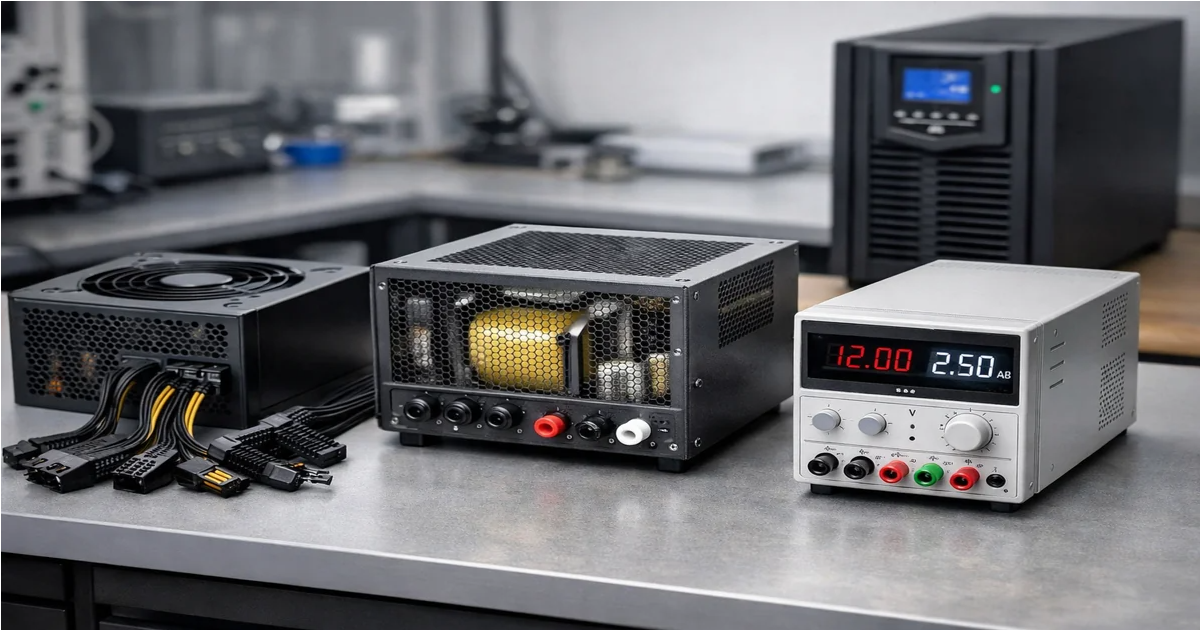
Every electrical system depends on one core function. It needs power that is stable, usable, and safe for the equipment it feeds. That role is handled by the power supply. While it often stays out of sight, it has a direct impact on performance, reliability, and efficiency.
If you are working with industrial equipment, electronics, or energy systems, understanding the different types of power supplies helps you avoid mismatches that lead to overheating, instability, or early component failure.
Choosing the right power supply is not about picking the strongest option. It is about selecting the one that fits how your system actually operates.
What a Power Supply Does
A power supply converts electrical energy into a form that equipment can use safely. Most devices require specific voltage and current levels. Raw power from the grid rarely matches those requirements directly.
The power supply handles this conversion and regulation. It ensures voltage stays within limits and protects equipment from fluctuations. Without proper regulation, even high-quality equipment can behave unpredictably.
This is why power supply selection is a system decision, not just a component choice.
Linear Power Supplies and Where They Fit
Linear power supplies are one of the simplest designs. They reduce voltage using transformers and regulate output through linear components. Their main advantage is low electrical noise.
You often find them in sensitive electronic applications where clean power matters more than efficiency. However, linear designs are bulky and generate more heat. That makes them less suitable for high-power or space-constrained environments.
They still serve a purpose, but their use is more limited in modern systems.
Switching Power Supplies in Modern Systems
Switching power supplies are widely used today because they are compact and efficient. They regulate power by switching components on and off at high frequency. This allows precise voltage control with less energy loss.
Most industrial electronics and control systems rely on switching designs. They handle a wide range of input voltages and adapt well to changing loads. This flexibility makes them a common choice when evaluating the different types of power supplies available today.
Their design supports scalability and integration into complex systems.
DC Power Supplies for Electronics and Control
DC power supplies provide direct current at regulated voltage levels. They are essential for electronics, automation systems, and digital equipment.
In industrial environments, DC supplies often support sensors, controllers, communication systems, and embedded electronics. Stable DC output is critical for accuracy and reliability.
The quality of regulation and protection features matters here. Poor DC supply design can introduce noise or instability that affects system behavior.
AC Power Supplies for Broader Applications
AC power supplies deliver alternating current at controlled voltage and frequency. They are used when equipment requires AC input or when testing and simulation demand specific electrical conditions.
In industrial and energy environments, controlled AC supplies support equipment testing, system validation, and power conditioning. They also play a role in marine and infrastructure applications where standardized AC output is required.
Understanding where AC supplies fit helps you narrow down the different types of power supplies that make sense for your use case. Also read about Difference between On Grid and Off Grid Solar Inverters.
How to Choose the Right Power Supply
The right choice depends on load type, voltage requirements, efficiency goals, and environmental conditions. You need to understand how your equipment behaves during startup, operation, and shutdown.
Thermal performance and protection features also matter. Overcurrent, overvoltage, and temperature protection help prevent failures.
Power solutions designed for demanding environments, such as those supported by BOS POWER LLC, focus on stability and long-term reliability rather than short-term performance alone.
Why Matching the Power Supply to the System Is Critical
Using the wrong power supply can cause subtle problems that grow over time. Voltage drift, overheating, and intermittent faults often trace back to a mismatched power design.
By understanding the different types of power supplies, you can align electrical characteristics with real operating needs. This improves performance and extends system life.
Conclusion
The different types of power supplies exist because no single design fits every application. Linear, switching, DC, and AC supplies all serve specific roles.
When you choose based on how your system actually works, you reduce risk and improve reliability. If you want power solutions designed for real-world industrial and energy applications, visit BOS POWER LLC to explore systems built with stability and performance in mind.
