
Blogs
What is Difference between On Grid and Off Grid Solar Inverters?

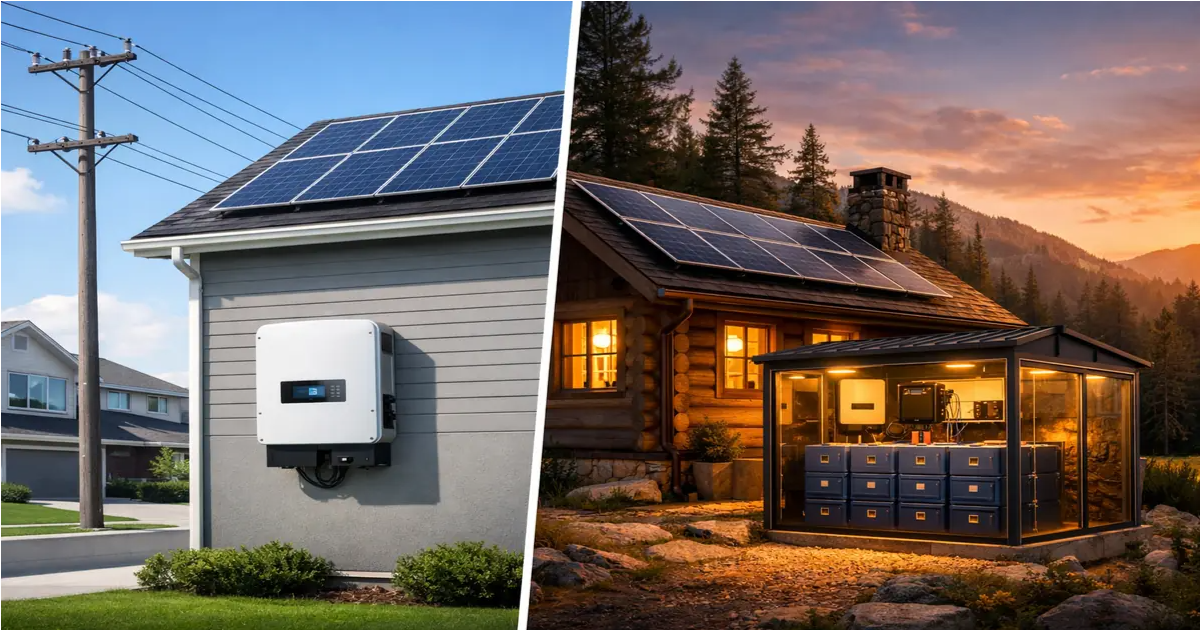
When you plan a solar system, panels often get the most attention. In reality, the inverter determines how that energy is used. It controls how power flows, how stable the system feels, and how flexible your setup can be. This is why understanding the Difference between On Grid and Off Grid solar inverters is important. Each type is built for a very different purpose. Choosing the wrong one can limit performance or create unnecessary complexity.
If you want a system that actually matches how you use energy, the inverter choice needs careful thought.
How On-Grid Solar Inverters Work
An on-grid solar inverter is designed to work alongside the utility grid. It converts DC power from solar panels into AC power that matches grid voltage and frequency. That power is used by your loads first, and any excess is sent back to the grid.
On-grid systems do not usually include batteries. They rely on the grid for balance. When solar production drops, the grid supplies the difference. When solar production exceeds demand, the grid absorbs the excess.
This design keeps systems simple and efficient. It also means that during a grid outage, an on-grid inverter shuts down for safety reasons. Without the grid present, it cannot operate.
How Off-Grid Solar Inverters Work
An off-grid solar inverter is designed for independence. It operates without a utility connection and works closely with batteries. Solar energy is stored and then converted to AC power when needed.
Because there is no grid to stabilize voltage and frequency, the inverter must manage everything internally. It controls charging, discharging, and power delivery in real time.
Off-grid systems are common in remote locations, industrial sites, and applications where grid access is unreliable or unavailable. They offer autonomy, but they require careful system design.
The Key Difference Between On-Grid And Off-Grid Systems
The core difference between on-grid and off-grid solar inverters comes down to dependence on the grid. On-grid systems use the grid as a backup and balancing tool. Off-grid systems must create their own stability.
This affects how systems are sized and operated. On-grid systems focus on efficiency and simplicity. Off-grid systems focus on reliability and energy availability.
Battery integration is another major difference. Off-grid systems require storage. On-grid systems usually do not.
Understanding this distinction helps you avoid assumptions that can lead to poor performance.
Which Option Fits Your Energy Needs
If you have reliable grid access and want to reduce electricity costs, an on-grid inverter may make sense. It allows you to use solar energy efficiently without managing batteries.
If you operate in a remote area, need backup power, or want full energy independence, an off-grid inverter becomes necessary. It gives you control but requires planning around storage capacity and load behavior.
This decision should be based on how you actually use power, not just on initial cost.
Also read about Different Types of Power Supplies.
Why System Design Matters
The difference between on-grid and off-grid systems also affects long-term flexibility. Off-grid systems must handle peak loads, charging cycles, and extended low-generation periods. On-grid systems must coordinate safely with utility infrastructure.
Poor design can lead to unstable power, reduced battery life, or underutilized solar capacity. That is why power system architecture matters as much as component selection.
Power solutions designed for industrial and energy environments, such as those supported by BOS POWER LLC, focus on matching inverter behavior to real operating conditions rather than generic assumptions.
Making the Right Choice From the Start
There is no universal best option. The right inverter depends on location, reliability needs, and energy goals. By understanding the difference between on-grid and off-grid solar inverters, you reduce the risk of rework and disappointment later.
Solar systems perform best when every part is chosen with intention.
Conclusion
The difference between on-grid and off-grid solar inverters lies in how they interact with the grid, manage energy, and support reliability. On-grid systems offer simplicity. Off-grid systems offer independence.
If you are planning a solar project, start by defining how you want your energy system to behave. To explore inverter and power solutions designed for real-world energy applications, visit BOS POWER LLC and learn how modern power systems are built for performance and reliability.
