
Blogs
Top Energy Storage Technologies You Should Know

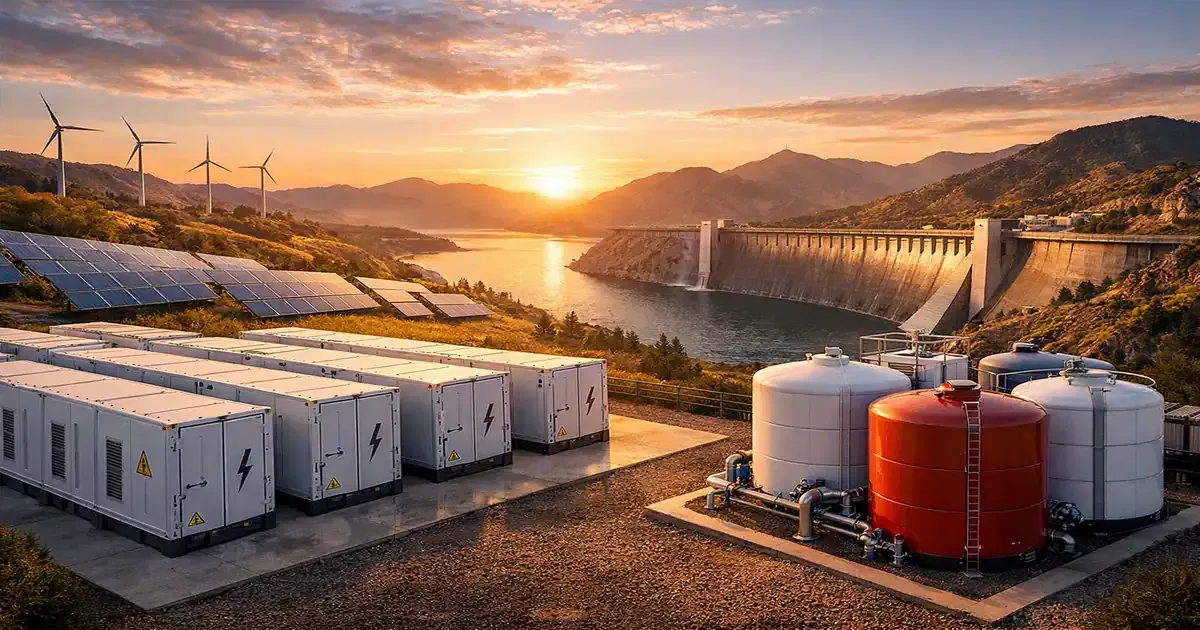
Energy use is no longer steady or predictable. Demand rises and falls. Renewable generation changes with the weather. Power systems must respond quickly without losing stability. This is why storage is no longer optional.
Understanding energy storage technologies helps you see how modern systems balance supply and demand. Storage allows energy to be captured when it is available and used when it is needed. Without it, many renewable and hybrid systems would struggle to perform reliably.
If you work with industrial, commercial, or energy infrastructure, storage plays a growing role in system design and planning.
Battery Energy Storage and Its Role
Battery-based systems are among the most widely used storage solutions today. They store electrical energy chemically and release it when required. Lithium-ion batteries are common due to their high energy density and fast response.
Battery systems are often used for peak management, backup power, and renewable integration. Their ability to respond in milliseconds makes them valuable for stabilizing power systems.
When paired with advanced power electronics, batteries become tools that support a wide range of operating conditions.
Mechanical Storage Methods
Not all storage relies on batteries. Mechanical approaches store energy in physical form and release it later.
Pumped hydro storage uses excess electricity to move water uphill. When power is needed, water flows back down through turbines. Flywheel systems store energy as rotational motion and release it rapidly when required.
These methods are well-suited for specific use cases. Pumped hydro supports large-scale grid storage. Flywheels handle short-duration power smoothing and frequency regulation.
These options show how diverse energy storage technologies can be depending on scale and response needs.
Thermal Energy Storage
Thermal storage captures energy as heat or cold rather than electricity. This stored thermal energy can later be converted back into electrical energy or used directly.
In industrial settings, thermal storage supports process heating, cooling, and efficiency improvements. In energy systems, it helps shift energy use to off-peak periods.
While thermal storage is not always visible, it plays an important role in managing overall energy demand.
Hydrogen as an Energy Storage Medium
Hydrogen can also be used as a storage method. Electricity is used to produce hydrogen through electrolysis. That hydrogen is then stored and later converted back into electricity energy using fuel cells or turbines.
This approach allows long-term and large-scale storage. It is especially useful when excess renewable energy needs to be stored for extended periods.
Hydrogen storage highlights how energy storage systems are expanding beyond traditional electrical systems. Read more about Hydrogen Fuel Cell Technology.
Why Power Electronics Matter in Storage Systems
Storage alone is not enough. Energy must be controlled, converted, and delivered safely. This is where inverters and converters become essential.
Power electronics manage charging and discharging, regulate voltage and frequency, and protect both storage assets and connected loads. Without proper control, storage systems cannot operate effectively.
Solutions designed for industrial and energy environments, such as those supported by BOS POWER LLC, focus on stable power conversion and system-level reliability.
Choosing the Right Storage Technology
No single storage method fits every application. The right choice depends on how much energy you need to store, how fast you need it, and how often it will cycle.
Short-duration needs favor fast-response systems like batteries or flywheels. Long-duration needs may point toward hydrogen or thermal storage. Grid-scale projects often combine multiple approaches.
Understanding the strengths of different energy storage technologies helps you make informed decisions that match real operating needs.
Why Storage Will Keep Growing
As energy systems become more decentralized and renewable generation increases, storage becomes essential for flexibility and resilience. It supports grid stability, improves efficiency, and reduces reliance on constant generation.
Storage is no longer just backup. It is part of everyday power management.
Conclusion
Energy storage technologies make modern power systems more flexible, reliable, and efficient. From batteries and mechanical systems to thermal and hydrogen-based storage, each option serves a specific purpose.
If you want to build or support energy systems that can adapt to changing demand, understanding storage is essential. To explore power solutions designed to support advanced storage integration, visit BOS POWER LLC and learn how modern energy systems are engineered for real-world performance.
