
Blogs
How Does Hydrogen Fuel Cell Technology Work?

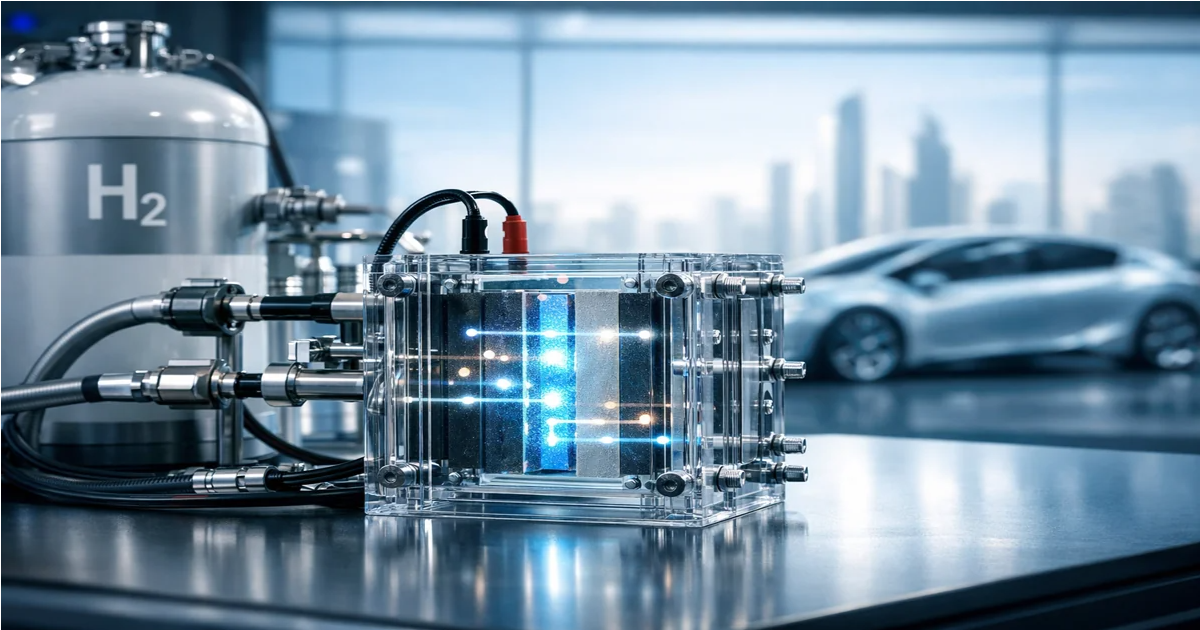
Energy systems around the world are under pressure to become cleaner, more efficient, and more reliable. You see this shift in renewable energy, energy storage, and alternative fuels. One technology that continues to gain attention is hydrogen fuel cell technology.
Hydrogen fuel cells offer a way to generate electricity without combustion. Instead of burning fuel, they rely on an electrochemical process that produces power with water as the primary byproduct. This makes hydrogen fuel cells appealing for applications where emissions and efficiency matter.
If you are exploring future energy options, understanding how this technology works helps you see where it fits and where it does not.
What Hydrogen Fuel Cell Technology Actually Is
Hydrogen fuel cell technology converts chemical energy directly into electrical energy. It does this through a controlled reaction between hydrogen and oxygen.
A fuel cell has three main parts. An anode, a cathode, and an electrolyte membrane between them. Hydrogen enters at the anode. Oxygen enters at the cathode. When hydrogen molecules are split, electrons are released and forced to travel through an external circuit. That movement of electrons creates electricity.
At the end of the process, hydrogen and oxygen combine to form water. No combustion occurs. No carbon dioxide is produced during operation.
How Electricity Is Generated Step by Step
When hydrogen enters the fuel cell, it is separated into protons and electrons. The protons pass through the electrolyte membrane. The electrons cannot. They travel through an external circuit instead, generating usable electrical power.
On the other side of the membrane, oxygen combines with the electrons and protons to form water. Heat is also produced as a byproduct. This heat can sometimes be captured and used, improving overall system efficiency.
This controlled reaction is why hydrogen fuel cell technology can achieve high efficiency compared to traditional combustion-based systems.
Why Fuel Cells Are Considered Efficient
Fuel cells convert energy more directly than engines or turbines. There is no burning process, so fewer energy losses occur. This makes hydrogen fuel cells attractive for applications that require steady power output over long periods.
Efficiency improves further when waste heat is used in combined heat and power systems. In these setups, both electricity and thermal energy support operations.
For you, this means fuel cells can deliver predictable performance with lower emissions, especially in controlled environments.
Where Hydrogen Fuel Cell Technology Is Used Today
You already see hydrogen fuel cell technology in transportation, backup power systems, and industrial energy projects. Fuel cell vehicles use it to produce electricity on board. Data centers and critical facilities use it as a clean backup power source.
In energy systems, fuel cells are often paired with power electronics and control systems that manage voltage, current, and load behavior. These supporting technologies are essential for integrating fuel cells into real-world applications.
Power conversion and control solutions, such as those supported by BOS POWER LLC, play an important role in ensuring fuel cell output can be used safely and efficiently in complex energy environments. Also read more about Energy Storage Technologies.
Challenges You Should Be Aware Of
Hydrogen fuel cells are not without challenges. Hydrogen production, storage, and distribution require infrastructure that is still developing in many regions. Cost is also a factor, especially for large-scale deployment.
Despite these challenges, research and investment continue to grow. Improvements in efficiency, materials, and system integration are making hydrogen more practical over time.
Understanding these limitations helps you evaluate where hydrogen fuel cell technology fits realistically within broader energy strategies.
Why Fuel Cells Matter for the Future
Hydrogen fuel cells offer a path toward low-emission power generation with high efficiency. They complement renewable energy and storage rather than replacing them.
As energy systems become more diverse, fuel cells add another option for reliable and flexible power. Their success depends on proper integration with power electronics, storage, and control systems.
Conclusion
Hydrogen fuel cell technology works by converting hydrogen and oxygen into electricity through an electrochemical process. It delivers clean power, steady output, and high efficiency.
If you are exploring advanced energy solutions, understanding how hydrogen fuel cell technology works helps you make informed decisions about future systems. To learn how modern power conversion and control solutions support emerging energy technologies, visit BOS POWER LLC and explore how reliable power systems are built.
