
Blogs
Common Use Cases of Four-Quadrant Power Supply in R&D Labs

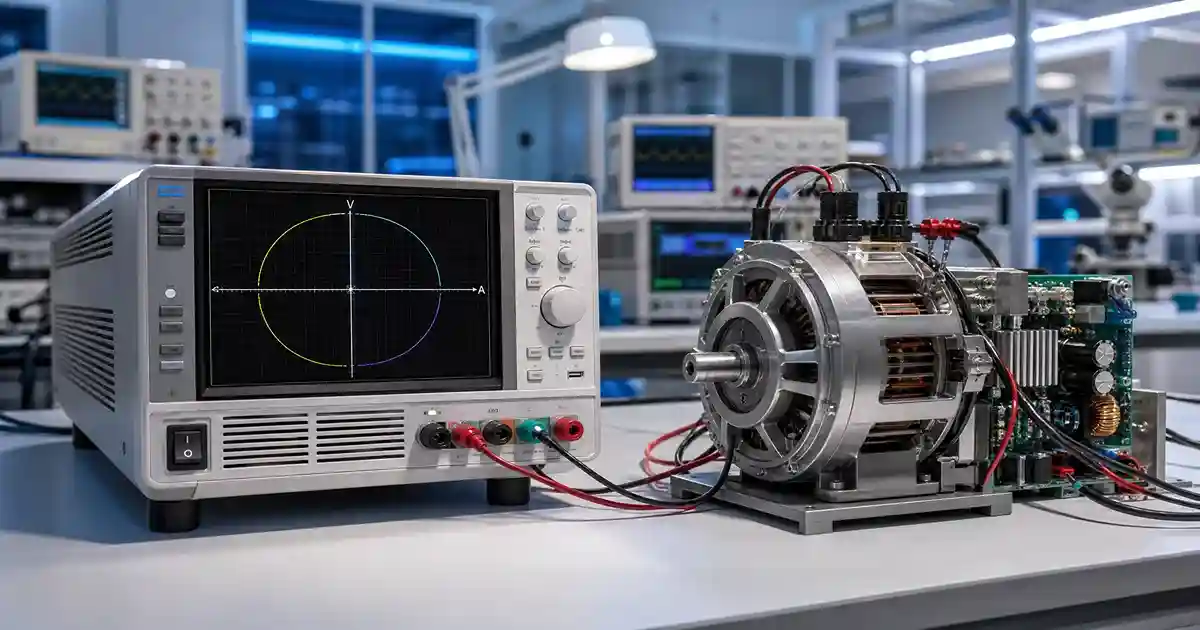
When you work in research and development, you quickly realize that testing is never simple. You are not just powering devices. You are simulating real-world conditions, pushing limits, and observing how systems respond under stress.
That is where a Four-Quadrant Power Supply becomes essential.
Unlike standard power supplies, this system can both deliver and absorb power. It allows you to test equipment in a way that closely matches real operating environments. If you are involved in advanced testing, this capability can make a noticeable difference.
What Makes Four-Quadrant Operation Unique
Most traditional power supplies operate in one direction. They provide power to a load.
A Four-Quadrant Power Supply works differently. It operates in four modes. It can supply power and also absorb it. This means it can simulate both energy consumption and energy generation.
In practical terms, this allows you to replicate conditions such as charging and discharging cycles, regenerative braking, or sudden load reversals.
For R&D environments, this flexibility is not just useful. It is necessary.
Testing Batteries and Energy Storage Systems
One of the most common uses of a Four-Quadrant Power Supply is battery testing.
When you are testing batteries, especially for electric vehicles or energy storage systems, you need to simulate both charging and discharging. A one-directional system cannot do this effectively.
With a four-quadrant system, you can cycle the battery under controlled conditions. You can observe performance, measure efficiency, and identify potential issues.
This level of control helps you get accurate results without introducing unnecessary variables.
Simulating Real-World Load Conditions
In R&D labs, devices rarely operate under constant conditions. Loads can change quickly. Systems may switch between consuming and generating energy.
A four-quadrant setup allows you to simulate these transitions smoothly.
For example, if you are testing motor drives or renewable energy systems, you can recreate how they behave under fluctuating loads. This helps you understand system stability and performance before deployment.
Solutions offered by companies like BOS Power are designed to support these advanced testing requirements with precision and reliability.
Improving Efficiency in Testing Environments
Another advantage of four-quadrant systems is energy efficiency.
When the system absorbs power, it does not simply waste it as heat. Instead, it can feed energy back into the grid or reuse it within the system. This reduces overall energy consumption during testing.
For labs running continuous tests, this can lead to significant savings over time.
It also aligns with modern energy goals, where efficiency and sustainability are becoming just as important as performance. Also read about Anti-Islanding Protection.
Supporting Advanced Product Development
As technology evolves, products are becoming more complex. Whether you are working on electric vehicles, renewable energy systems, or industrial equipment, your testing environment needs to keep up.
A Four-Quadrant Power Supply gives you the flexibility to test a wide range of scenarios without switching between multiple power supplies.
This simplifies your setup and improves testing accuracy. It allows you to focus on development rather than managing equipment limitations.
Conclusion
In R&D labs, precision and flexibility are everything. A Four-Quadrant Power Supply helps you achieve both by allowing you to simulate real-world conditions with accuracy.
It supports battery testing, load simulation, and energy-efficient operation, all within a single system.
If you are looking to improve your testing capabilities, investing in the right power supply setup can change how you approach development.
