
Blogs
How Does a Power Supply Convert AC to DC?

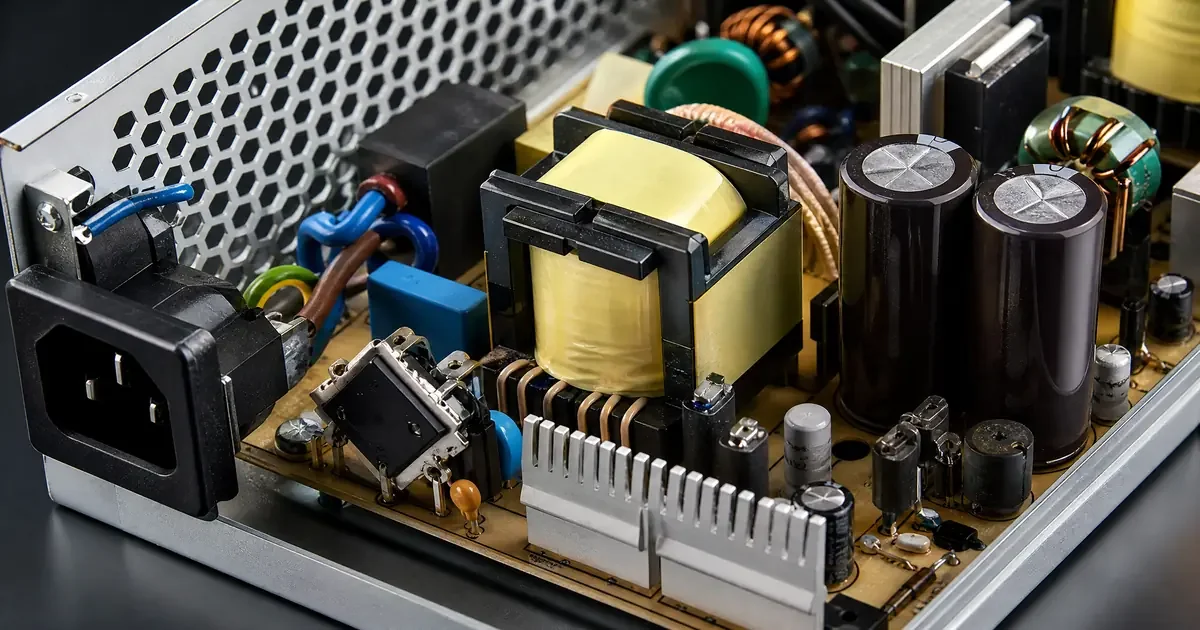
Almost every electronic device you use daily runs on direct current, yet the electricity coming out of your wall outlet is alternating current. So how do the two connect? Understanding how does a power supply convert AC to DC helps you appreciate the engineering that sits quietly behind every powered device, from your laptop charger to industrial control systems.
AC vs DC: What Is the Difference?
Alternating current constantly changes direction at a fixed frequency, typically 50 Hz or 60 Hz, depending on your region. This makes it efficient for transmitting electricity over long distances. Direct current, however, flows in a single consistent direction and is what most electronic circuits and batteries require to operate correctly. Therefore, converting between the two is a fundamental step in powering modern electronics.
Step 1: Transformation
The first stage in understanding how does a power supply convert AC to DC is the transformation. A transformer adjusts the voltage level of the incoming AC supply. For example, mains voltage of 230V might be stepped down to a lower voltage suitable for the intended application. Transformers work on the principle of electromagnetic induction, using primary and secondary coils wound around a shared iron core.
Step 2: Rectification
After transformation, the AC signal is passed through a rectifier circuit made up of diodes. Diodes only allow current to flow in one direction. A full-wave bridge rectifier uses four diodes arranged in a specific configuration that converts both the positive and negative halves of the AC cycle into a pulsating DC signal. The result is a bumpy, uneven DC output that still needs refinement.
Step 3: Filtering
The pulsating DC from the rectifier is smoothed out using capacitors. A capacitor charges when the voltage rises and discharges when it falls, effectively filling in the gaps to produce a much smoother DC output. Larger capacitors provide better smoothing. However, even after filtering, some ripple voltage remains.
Step 4: Regulation
The final stage is voltage regulation. A voltage regulator maintains a stable, consistent DC output voltage regardless of changes in the input voltage or load current. Modern switching-mode power supplies use pulse-width modulation techniques to regulate output with very high efficiency, often exceeding 90 percent.
Get Reliable Power Conversion for Your Operations
Now that you know how does a power supply convert AC to DC, you can better evaluate the quality and reliability of the power systems supporting your operations. BOS Power delivers expertly engineered power generation and energy storage solutions for marine, data centre, and industrial environments. Contact us today to explore how we can keep your operations powered and protected.
