
Blogs
What Is a Bidirectional DC/DC Converter?

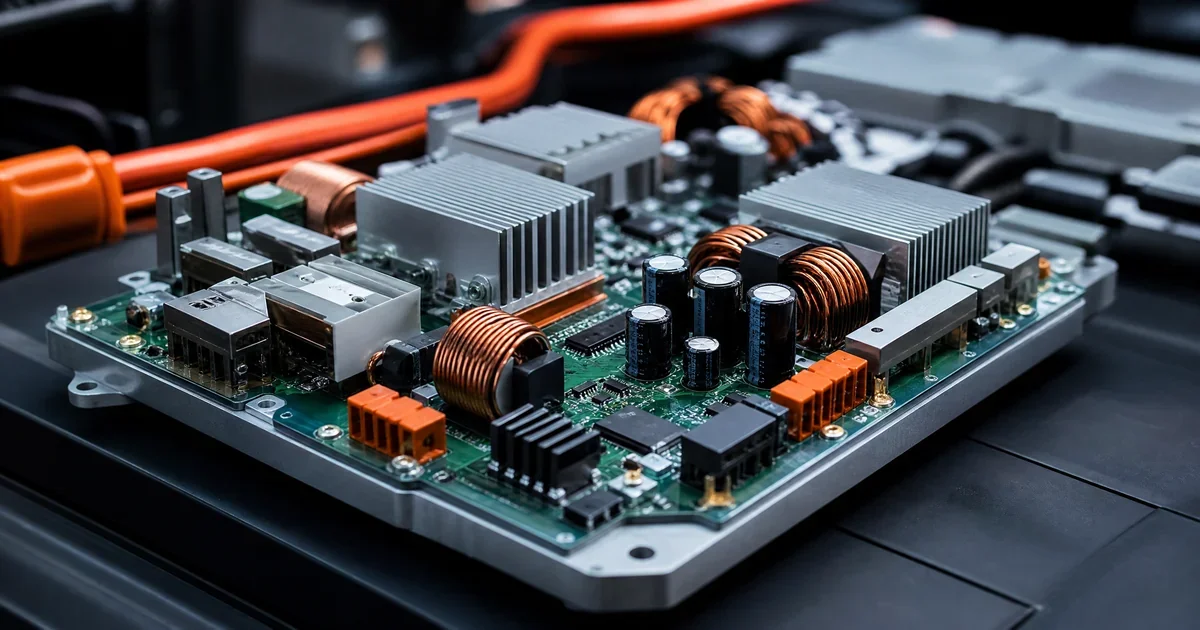
If you work with power systems or energy storage, you have probably come across the term bidirectional DC/DC converter at some point. But what exactly does it mean, and why does it matter? Understanding this technology is key to grasping how modern energy systems manage power flow efficiently, especially in applications where energy needs to move in both directions.
The Basic Idea Behind It
A bidirectional DC/DC converter is a power electronics device that can transfer energy in two directions between two DC voltage buses. Unlike a standard unidirectional converter, which only steps voltage up or down in a single direction, a bidirectional converter can both charge and discharge energy storage systems. This makes it especially valuable in applications like battery energy storage, electric vehicles, and renewable energy integration.
Think of it this way. When your solar panels generate more energy than you need, the converter directs that excess energy into your battery. When demand rises and the grid falls short, the same converter pulls energy back out of the battery and delivers it to your load. That two-way capability is what makes it so powerful.
How It Works: Converter Control and Power Flow
The operation of a bidirectional converter relies heavily on converter control strategies that govern switching devices like MOSFETs or IGBTs. These switching devices are arranged in a half-bridge or full-bridge topology. By controlling their switching patterns, the system regulates voltage and current in either direction without needing separate circuits for charging and discharging.
In boost mode, the converter steps voltage up from a lower bus to a higher bus. In buck mode, it steps voltage down. The direction of power flow is determined by the control signals sent to the switching devices. Advanced closed-loop control algorithms continuously monitor voltage and current to ensure the system stays stable under varying load conditions.
Role in DC-to-DC Converter Energy Storage Systems
In DC-to-DC converter energy storage systems applications, this technology serves as the bridge between your battery bank and the rest of your power system. It ensures that energy is stored and retrieved at the right voltage levels, protecting your batteries and maximising their lifespan. This is critical in grid-scale battery energy storage systems, where efficiency and reliability directly affect operational costs.
For industries like marine, data centres, and critical infrastructure, having reliable energy storage management is not optional. It is essential. That is precisely why systems built around this technology are trusted for mission-critical operations.
What About Isolated Bidirectional DC/DC Designs?
An isolated bidirectional DC/DC converter adds a transformer to the circuit, creating electrical isolation between the input and output sides. This isolation improves safety and allows for larger voltage conversion ratios. It is commonly used in applications where safety regulations require galvanic isolation, such as in medical equipment or high-voltage industrial systems.
Additionally, isolated topologies reduce the risk of ground loops and noise interference, making them ideal for sensitive electronic environments. Therefore, when designing a system for environments with strict electrical standards, an isolated variant is often the preferred choice.
Power Your Operations with the Right Technology
Now that you understand what a bidirectional DC/DC converter does, it is time to see how it can work for your specific power requirements. At BOS Power, we design and deliver energy storage and power generation systems built around proven technologies. Reach out to our team today and let us help you find the right solution for your operations.
