
Blogs
How Renewable Energy Microgrids Power Remote Areas

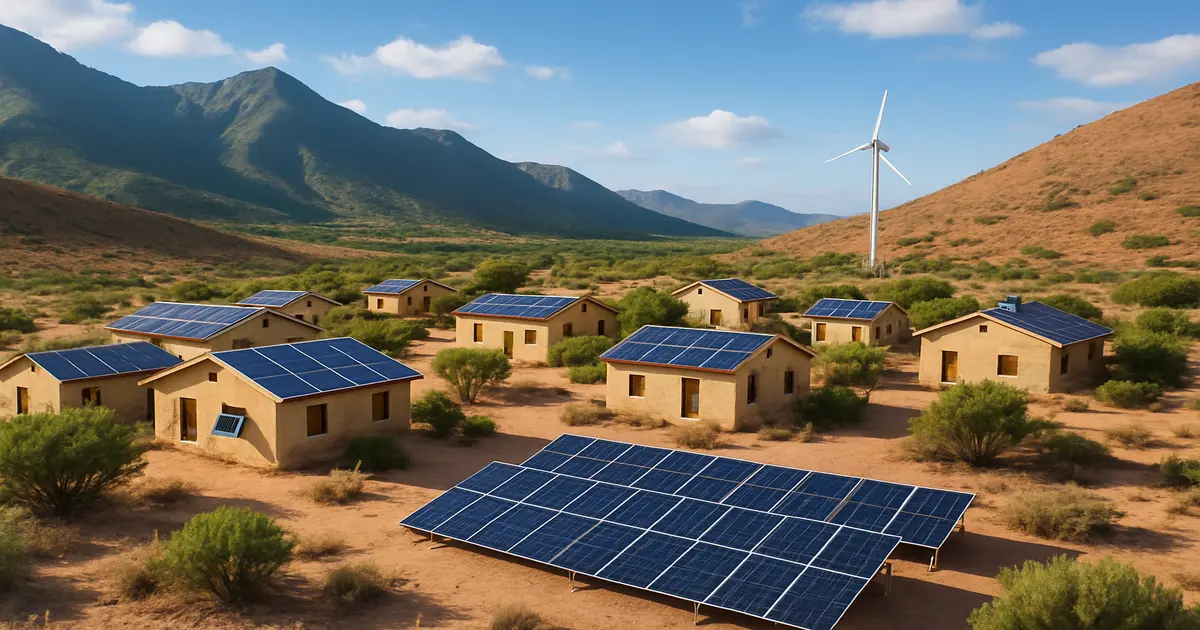
In many remote regions, access to reliable electricity remains a daily challenge. Extending national grids to mountains, islands, or rural communities is often too costly or technically impossible. The answer increasingly lies in renewable energy microgrids, localized systems that generate, store, and distribute their own power. These self-sustaining networks prove that energy independence doesn’t have to mean isolation. BOS Power helps make that independence practical, blending advanced control technology with clean-energy generation.
What Are Renewable Energy Microgrids?
A renewable energy microgrid is a small-scale power network capable of operating autonomously or in coordination with the main grid. It integrates multiple energy sources, solar, wind, small hydro, or biomass, with storage and intelligent control systems.
Core Elements of a Typical Microgrid:
- Renewable Generation: Solar panels or turbines capturing local resources.
- Energy Storage: Batteries that balance supply and demand in real time like Energy Arbitrage.
- Inverters and Converters: Manage AC/DC transitions for stable output.
- Control & Communication Systems: Direct power flow and monitor performance.
- Distribution Network: Connects homes, schools, and businesses to the local supply.
Unlike traditional centralized grids, microgrids turn every community into its own miniature utility, resilient, efficient, and sustainable.
Why Microgrids Matter in Remote Areas
Remote locations often rely on diesel generators, which are expensive, noisy, and polluting. Renewable energy microgrids replace that dependence with clean, locally generated electricity.
Key Advantages:
- Energy Access: Electrifies regions far from main-grid infrastructure.
- Cost Savings: Cuts fuel transport and operating expenses.
- Environmental Benefits: Eliminates emissions from fossil generation.
- Resilience: Keeps power flowing during natural disasters or outages.
- Scalability: Expands easily as communities grow or energy needs rise.
- Community Empowerment: Encourages local ownership and maintenance.
For remote villages, research stations, and island resorts, microgrids don’t just provide power, they provide opportunity.
How Renewable Microgrids Work
The operation of a microgrid depends on balancing production, storage, and consumption through a central energy management system (EMS).
- Generation: Renewable sources produce power when resources are available.
- Conversion: Inverters transform energy into usable AC electricity.
- Storage: Batteries store excess energy for nighttime or low-generation periods.
- Distribution: Smart controllers deliver consistent voltage to all users.
- Optimization: Data analytics ensure minimal loss and maximum efficiency.
This coordinated cycle allows even small communities to enjoy reliable electricity twenty-four hours a day.
Real-World Impact
Across the globe, microgrids are proving their worth: powering schools in Africa, telecommunications towers in Southeast Asia, and emergency shelters in disaster-prone regions. They reduce fuel imports, improve air quality, and create local jobs for maintenance and technical training.
The combination of renewables and storage means that energy no longer needs to come from far away. It can be produced where it’s needed most.
The Future of Decentralized Energy
As renewable technologies become cheaper and more efficient, renewable energy microgrids will continue spreading to new markets. Artificial intelligence, predictive analytics, and modular design will make them even smarter and easier to deploy.
BOS Power supports this transition by developing control and conversion technologies that enable seamless integration of solar, storage, and hybrid energy sources, giving communities the tools to generate clean power, their way.
Conclusion
Renewable energy microgrids represent a shift from dependence to empowerment. They bring electricity to places the traditional grid cannot reach and stability where it’s needed most. For remote areas seeking sustainable development, microgrids aren’t the future. They’re the present, lighting paths to growth and self-reliance.
