
Blogs
Why Solar Inverter Sizing is Important for Your Solar Energy System

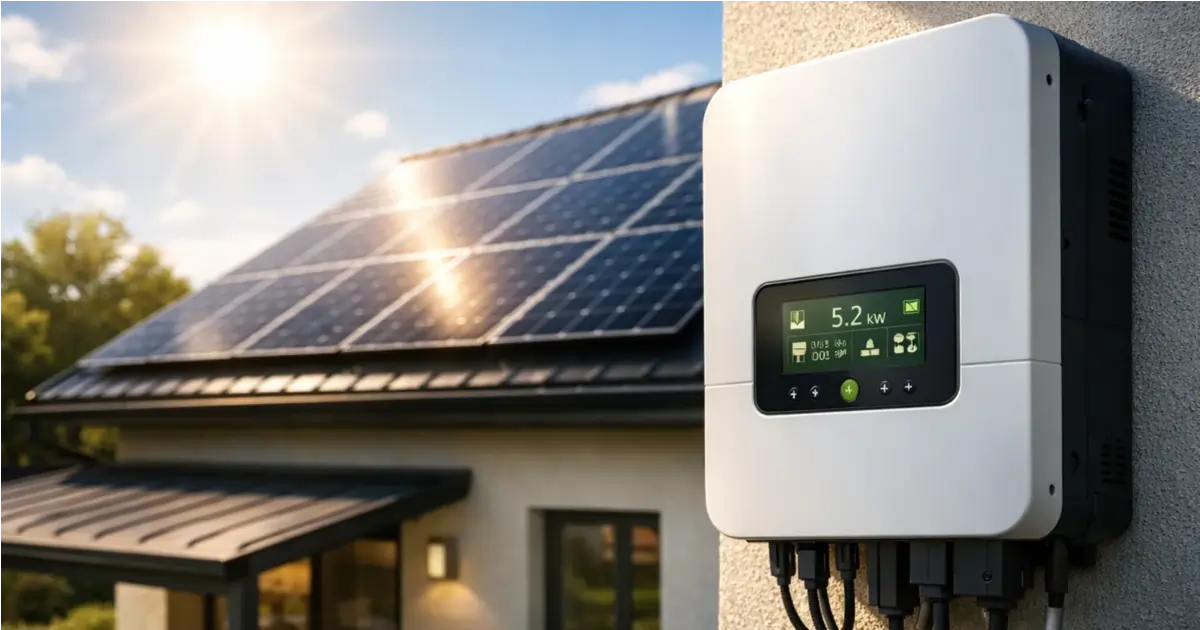
When you invest in solar energy, most of your attention goes to panels. You compare efficiency ratings. You look at wattage. You think about roof space. But the inverter is just as important. Without proper Solar Inverter Sizing, even high-quality panels cannot deliver their full potential.
Your inverter converts DC electricity from solar panels into AC electricity that your system can use. If it is undersized or oversized, performance suffers. Energy can be lost. Equipment can wear faster. Costs can rise unnecessarily.
If you want your solar system to perform reliably for years, sizing the inverter correctly is not optional. It is essential.
What Happens If the Inverter Is Too Small
If the inverter is too small compared to your solar array, it cannot process all the power your panels produce during peak sunlight hours. This leads to what is known as clipping.
Clipping occurs when the inverter limits output because it has reached its maximum capacity. On bright days, you may lose usable energy simply because the inverter cannot convert it.
While some level of clipping can be acceptable in system design, excessive undersizing reduces overall energy harvest. That is why proper Solar Inverter Sizing requires balancing cost, performance, and expected production.
What Happens If the Inverter Is Too Large
Oversizing the inverter may sound safer, but it has its own drawbacks. A significantly oversized inverter may operate below its optimal efficiency range most of the time.
Inverters are most efficient when operating near their rated capacity. If your system rarely reaches those levels, you may not be using the equipment effectively.
Correct Solar Inverter ensures the inverter operates efficiently throughout the year, not just during peak production.
Understanding the DC to AC Ratio
A common method for Solar Inverter Sizing is to evaluate the DC-to-AC ratio. This ratio compares the total power rating of the solar panels to the inverter’s AC output rating.
A slightly higher DC rating compared to the inverter AC rating is often acceptable and even intentional. It allows better performance during lower sunlight conditions while tolerating minimal clipping during peak hours.
The goal is not to eliminate clipping entirely. The goal is to optimize annual energy production.
Considering Environmental Conditions
Your location matters. Temperature affects panel output. Sunlight patterns affect peak generation times. Seasonal variations change production levels.
If you are in a hot climate, panels may produce slightly less power than their rated output due to temperature effects. This influences inverter sizing decisions.
Proper Solar Inverter Sizing takes real-world environmental conditions into account rather than relying only on nameplate ratings. Also read about Depth of Discharge.
Matching Inverter Type to System Design
Inverter sizing also depends on system configuration. String inverters, central inverters, and hybrid inverters have different design considerations.
If your system includes battery storage, peak load management, or grid interaction, inverter capacity must align with both generation and load requirements.
Solutions designed for integrated solar and energy systems, such as those supported by BOS-Power, emphasize system-level planning rather than component-level decisions.
Why Proper Sizing Improves Long-Term Performance
Correct Solar Inverter Sizing improves efficiency, reduces stress on equipment, and supports stable operation over time. It also ensures you maximize return on investment by capturing as much usable energy as possible.
Poor sizing decisions often lead to performance limitations that are difficult to correct later without replacing equipment.
When you approach inverter sizing thoughtfully, you build a solar system that performs consistently and predictably.
Conclusion
Solar Inverter Sizing plays a crucial role in the overall efficiency and reliability of your solar energy system. Too small and you lose energy. Too large and you reduce operational efficiency.
When you balance panel output, environmental factors, and system architecture, you create a solar setup that works smarter, not harder. To explore integrated solar and power solutions built for long-term performance, visit BOS-Power and learn how proper system design supports lasting results.
