
Blogs
Transmission vs Distribution Power Lines: What’s the Difference?

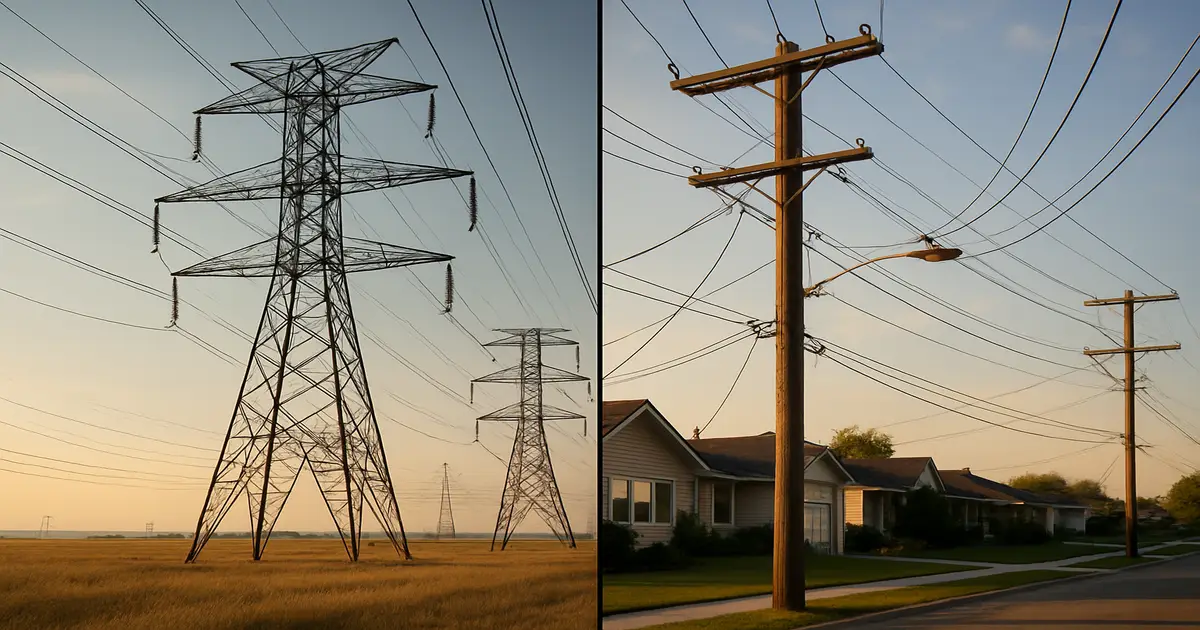
When you look up and see power lines running along roads or across open land, they may all look similar. In reality, those lines serve very different purposes. Understanding transmission vs distribution power lines helps you see how electricity travels from power plants all the way to your home, facility, or industrial site.
If you manage energy systems or rely on stable power for operations, this distinction matters more than you might think. Each type of line plays a specific role, and problems at either stage can affect reliability, safety, and performance.
What Transmission Power Lines Do
Transmission power lines are responsible for moving large amounts of electricity over long distances. They carry power from generating stations to substations located closer to cities, industrial zones, and populated areas.
These lines operate at very high voltages. High voltage allows electricity to travel efficiently with lower losses over long distances. You typically see transmission lines supported by tall towers and spaced far apart. That design helps manage electrical clearance and safety at high voltage levels.
Transmission systems are the backbone of the grid. If something fails at this level, the impact can spread across wide regions.
What Distribution Power Lines Do
Once electricity reaches a substation, it must be delivered to end users. That is where distribution power lines take over. Distribution lines operate at much lower voltages than transmission lines and carry electricity directly to homes, businesses, and industrial facilities.
These are the lines you see most often along streets and neighborhoods. Transformers mounted on poles or in ground-level enclosures step the voltage down further so it can be safely used by equipment and appliances.
In the comparison of transmission vs distribution power lines, distribution systems focus more on local reliability and safety than long-distance efficiency.
Key Differences Between Transmission vs Distribution Power Lines
The most obvious difference is voltage. Transmission lines operate at very high voltages to move power efficiently. Distribution lines operate at lower voltages to safely deliver electricity to users.
Distance is another difference. Transmission lines span long distances between generation and substations. Distribution lines cover shorter distances within communities and industrial zones.
Design and infrastructure also vary. Transmission systems use large towers and wide corridors. Distribution systems use poles, underground cables, and compact substations designed for local access.
Understanding transmission vs distribution power lines helps you identify where issues may arise when power interruptions occur.
Why This Difference Matters to You
If you experience a widespread outage affecting entire regions, the issue often lies in the transmission system. If outages are localized to specific streets or facilities, the distribution system is usually involved.
For industrial users, knowing this distinction helps with planning backup power, system protection, what is peak load and management. Equipment connected at the distribution level still depends on upstream transmission stability.
This is why many energy solutions focus on protecting both sides of the system. Power conversion, control, and monitoring technologies from providers like BOS Power support stable operation across different grid levels.
How Transmission and Distribution Work Together
Transmission and distribution are not separate systems competing with each other. They are connected stages of a single energy delivery chain. Transmission brings power close. Distribution brings it home.
When both systems are well designed and properly maintained, electricity flows smoothly from generation to consumption. When either side is stressed, the entire system feels it.
As energy demand grows and renewable sources expand, coordination between transmission and distribution becomes even more important. Smart grid technologies and advanced power electronics help bridge that gap.
Conclusion
Understanding transmission vs distribution power lines gives you insight into how electricity reaches you and why power systems are designed the way they are. Each plays a distinct role, and both are essential for reliable energy delivery.
If you want to strengthen your power infrastructure or plan for future demand, start by understanding where your systems connect within the grid. To explore power solutions designed for reliability across grid levels, visit BOS Power and learn how modern power technologies support stable energy systems.
