
Blogs
How to Test AC Power Supply With Multimeter

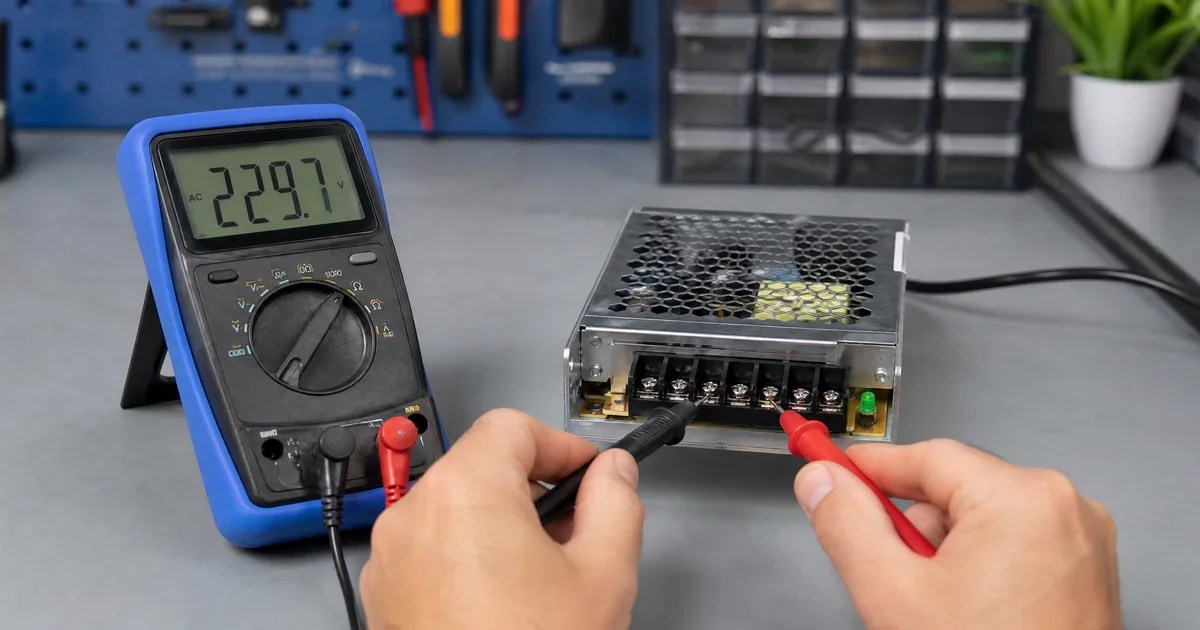
At some point, you will face a situation where a piece of equipment is not powering on and you are not sure whether the problem lies with the power supply or something downstream. Knowing how to test AC power supply with multimeter is one of the most practical skills you can have. It saves you time, reduces guesswork, and helps you make confident decisions before replacing any components.
What You Will Need Before You Start
Before anything else, gather a digital multimeter, your safety gloves, and your equipment’s documentation. Make sure the multimeter you are using can handle AC voltage readings. Most standard digital multimeters have an AC voltage (VAC) setting and this is what you will be using throughout the test. Set your multimeter to the correct voltage range based on the expected output of your power supply.
Step-by-Step: How to Test Your AC Power Supply
Here is a practical walkthrough on how to test AC power supply with multimeter without putting yourself at risk. First, make sure the power supply is connected to a live outlet but the load is disconnected. Plug in your multimeter probes, with the red probe going to the positive or live terminal and the black probe going to the neutral or ground terminal. However, always check your equipment’s schematic to confirm terminal polarity before connecting anything.
Once the probes are in place, read the display on your multimeter. A standard single-phase AC supply should read somewhere between 220V and 240V in most regions. If you are testing a 110V system, the reading should fall within that range. Therefore, if the reading is significantly lower or shows zero, there is likely a fault in the supply itself.
Checking Voltage With Multimeter: What the Readings Mean
When checking voltage with multimeter, the key is understanding what a healthy reading looks like versus a faulty one. A reading within 5 percent of the rated voltage is generally acceptable. However, a reading that fluctuates wildly, reads zero, or is far outside the expected range points to a failing supply, a tripped breaker, or a loose connection.
Additionally, if you are testing under load conditions, the voltage may drop slightly. That is normal. A significant drop under load, however, suggests the supply cannot handle the current demand and may need replacing or servicing.
Safety Tips You Should Not Ignore
Working with live AC power always carries risk. Always keep one hand in your pocket or away from any grounded surface while probing. Never touch the metal tips of the probes when power is applied. Use insulated probes rated for the voltage you are testing. Furthermore, never test a power supply in a wet or humid environment, as moisture dramatically increases the risk of electric shock.
Get Expert Support for Your Power Systems
Knowing how to test AC power supply with multimeter is a great starting point, but some power systems require professional assessment, especially in critical environments. BOS Power offers comprehensive support and service for power generation and energy storage systems. If you are not confident about your power supply’s health, contact our team today and we will make sure your operations stay running.
