
Blogs
How Many Solar Batteries Do I Need for a Solar System

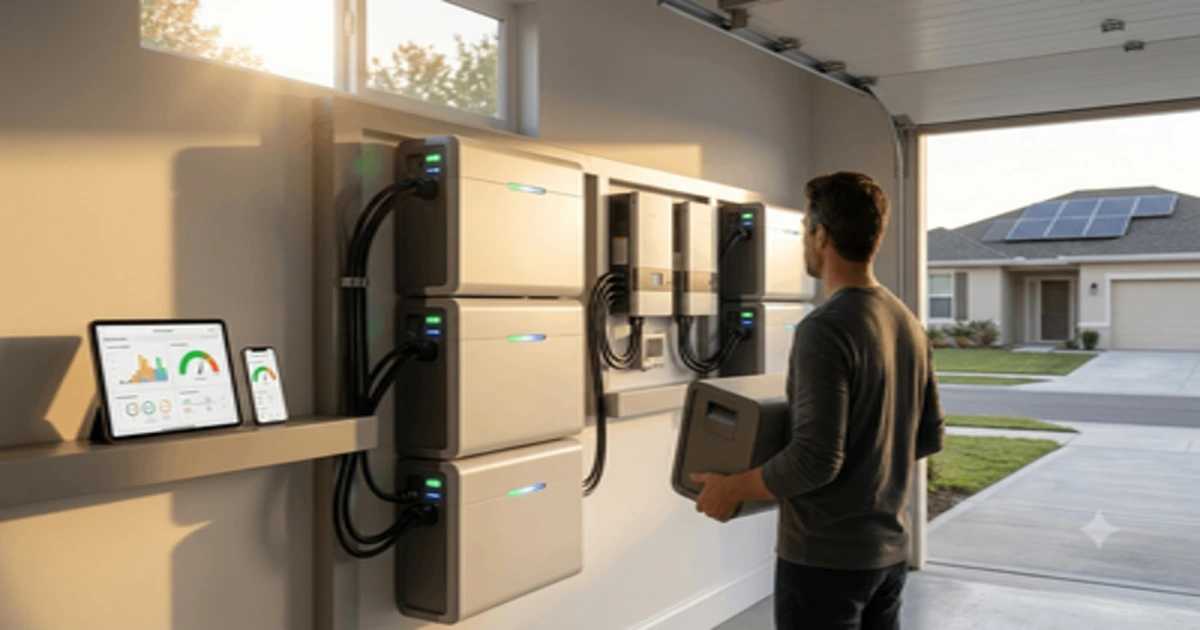
If you have ever stood in front of a wall of battery options, wondering how many you will actually need, you are definitely not alone. It is one of the most common questions homeowners and business owners ask once they have decided to add storage to their solar setup, and for good reason.
Get it wrong, and you either overspend on capacity you will never use or end up short when the power goes out. The good news is that figuring out how many solar batteries I need is not as complicated as it might seem once you break it down into a few simple steps. In this guide, you will learn exactly what factors matter, how to calculate your real energy needs, and how to land on a battery setup that actually fits your life. Let’s get into it.
Start With Your Daily Energy Usage
Before you can answer how many solar batteries do I need, you need to know how much electricity you actually use each day. According to the U.S. Energy Information Administration, the average American household uses around 30 kilowatt hours (kWh) per day, though your number could be higher or lower depending on your home size, climate, and habits.
Pull out a recent utility bill, divide your monthly usage by the number of days in the billing cycle, and you will have a solid baseline to work from.
Decide What You Are Actually Trying to Achieve
Your goal changes the math completely. If you simply want to shave a bit off your electricity bill by storing extra solar energy for evening use, you might only need enough capacity to cover your peak usage hours, often somewhere between 10 and 15 kWh.
If your priority is keeping the lights on during a grid outage, you will want enough storage to cover your essential loads, like your refrigerator, internet, and a few lights, for at least a day or two. And if you are aiming for full energy independence, the how many solar batteries do I need equation shifts toward covering close to 100 percent of your daily usage, plus a buffer for cloudy days.
Match Usable Capacity to Your Goals
Most modern lithium-ion solar batteries offer somewhere between 9 and 15 kWh of usable capacity per unit. So if your daily usage sits around 30 kWh and you are aiming for a one-day backup of essential loads only, a single battery in that range can often cover the basics comfortably.
If you want to cover roughly half your daily usage for cost savings, you are likely looking at two batteries working together. For full home backup during outages, three or more batteries are common, especially once heating, cooling, and major appliances are factored into the equation.
Do Not Forget Your Solar Panel Output
Here is something a lot of people overlook when working out how many solar batteries do I need. Your batteries are only as useful as the solar energy available to recharge them. If your panels cannot produce enough power during daylight hours to refill your batteries, you will end up relying on the grid anyway.
A good rule of thumb is to size your solar array so it can recharge your battery bank within four to six hours of strong sunlight, especially if you are planning for multiple cloudy days in a row.
Let BOS Power Help You Size It Right
At the end of the day, working out how many solar batteries you need comes down to your usage, your goals, and your existing solar setup, and getting those numbers right makes a real difference to your comfort and your budget. The engineers at BOS Power have over two decades of experience designing energy storage inverters and battery management systems for projects of every size. If you are ready to stop guessing and start planning, reach out to BOS Power and get a storage setup that is sized exactly right for you.
